
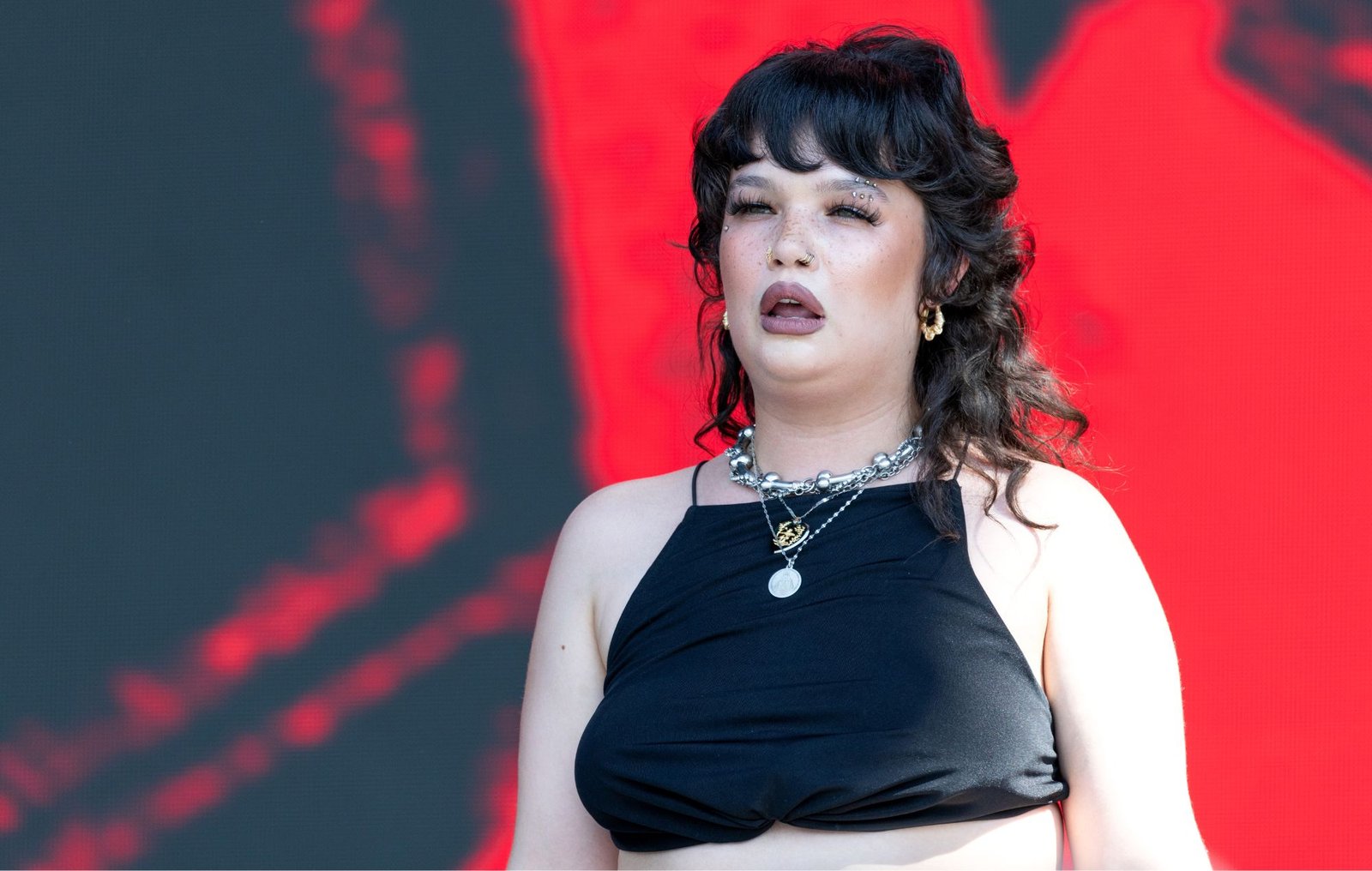
There are songs that entertain, and then there are songs that speak. Lola Young’s “Messy” is firmly in the second category. From the moment this raw, soul-drenched track hit TikTok, it stopped people mid-scroll, made them rewind, and ultimately turned a quietly talented South London singer-songwriter into a global phenomenon. If you’ve been wondering what the story is behind Lola Young messy — the song, the woman, the cultural moment — you’re in the right place. This is the full picture.
Who Is Lola Young? The South London Girl Who Became a Global Voice
Before we dive into the song itself, it’s worth understanding who Lola Young actually is, because her origin story is just as compelling as her music.
Born on January 4, 2001, in South East London, Lola Emily Mary Young grew up in the Beckenham area of Greater London. Her father is Jamaican-Chinese, her mother is English, and she was raised in a household where creativity was treated as a serious pursuit rather than a hobby. She’s been candid about not growing up with much money, but what her family gave her instead was something more valuable — permission to take music seriously as a real career.
At just 14, she started writing songs and performing at local open-mic nights. By 15, she had beaten roughly 9,000 competitors in the Open Mic UK contest, catching the attention of manager Nick Shymansky — the same manager who once worked with the late Amy Winehouse. That connection alone tells you something about the calibre of talent Lola was showing from an early age.
By 18, she had signed with Island Records. EPs followed. Then came her debut album, My Mind Wanders and Sometimes Leaves…, in 2023. She was building a devoted fanbase in the UK, earning a BRIT Award Rising Star nomination, and quietly sharpening the kind of songwriting that would eventually break her wide open internationally.
That breakthrough came in May 2024 with the release of “Messy,” the sixth single from her sophomore album This Wasn’t Meant for You Anyway. And nothing has been the same since.
What Is “Messy” Actually About? The Deeper Meaning Behind Lola Young Messy
On the surface, Lola Young Messy sounds like a breakup anthem. And it is — partly. But as Lola herself has explained in multiple interviews, the song runs much deeper than a single failed relationship.
“‘Messy’ is an ADHD anthem,” she told Metal Magazine. “It really showcases everything I felt during my last relationship, but also it is deeper than that — it talks about how I feel about myself in general. Being too messy one day and too clean another, struggling to find that balance in myself.”
That tension — swinging between chaos and control, between being “too much” and then suddenly “not enough” — is the emotional engine of the track. The lyrics cut to the heart of what it feels like to live with contradictions that others don’t always understand. Lola has spoken openly about being diagnosed with severe ADHD after writing the song, calling the diagnosis illuminating but complex.
When she appeared on The Tonight Show Starring Jimmy Fallon, she clarified the song’s inspiration further. She confirmed it touches on family dynamics and a romantic relationship, but made clear that it is, at its core, about herself. “I am too messy,” she said with characteristic self-deprecating honesty. “I’ve never held a broom in my life. Everything in my life is a mess — so it’s a very fitting track.”
What makes Lola Young’s messy resonate so powerfully is that it refuses to glamorize or apologize. It sits in the uncomfortable middle — the place where most real people actually live — and dares to call that space valid. It’s self-acceptance without sanitization, and listeners recognized it immediately.
How “Messy” Went Viral: TikTok, Sofia Richie, and the Power of Relatability
No conversation about Lola Young messy is complete without talking about TikTok. The song didn’t just become popular — it became the platform’s unofficial soundtrack for much of 2024 and well into 2025.
The viral moment that supercharged the song’s spread was Sofia Richie’s now-iconic “two-second two-step” dance to the track, which millions of users quickly replicated. When someone with Sofia Richie’s following does a casual, joyful dance to your song, the algorithm takes notice — and so does everyone else.
But the song’s viral spread wasn’t just celebrity-driven. It spread because ordinary people felt it in their bones. The hook — “Cause I’m too messy, and then I’m too fucking clean” — became a shorthand for the way many people feel caught between societal expectations and their genuine selves. The “clean girl aesthetic” was everywhere on social media at the time, presenting an idealized version of organized, effortless living. “Messy” was its honest counterpoint.
Lola put it perfectly on The Tonight Show: “It’s a song that seems to resonate because people can relate — not every day you have the clean girl aesthetic. Some days you haven’t washed your socks. And that’s fine.”
The numbers tell the rest of the story. The song accumulated over 189 million streams on Spotify, topped charts not just in the UK but also in Australia, Belgium, Croatia, Ireland, and Israel. The YouTube video surpassed 130 million views. It became certified 3x Platinum in the UK, and Lola earned the PRS for Music Most Performed Work award at The Ivors 2026 for the track.
The Musical DNA of “Messy”: Soul, Pop, and Something All Her Own
One reason Lola Young messy hit so hard is that the song itself is sonically distinctive. Lola’s voice is the kind that demands attention — scratchy but honeyed, raw but controlled, and carrying an emotional authority that sounds uncommon for someone her age.
She blends pop, soul, and R&B into something that doesn’t quite sit in any single category. Critics have noted influences ranging from Amy Winehouse and Joni Mitchell to Frank Ocean and Prince. Lola herself has cited Eminem, Avril Lavigne, and Bon Iver as childhood listening, and the Arctic Monkeys’ AM as a touchstone for the album This Wasn’t Meant for You Anyway.
What she’s created with “Messy,” though, is distinctly her own. It’s a song that sounds vintage and urgent at the same time, rooted in the soul tradition but alive to contemporary anxieties. The production doesn’t overwhelm the lyrical content — it serves it. And the lyrics are where Lola has always excelled.
“Lyrics is the most important aspect of songwriting for me,” she has said. “I care a lot about what I say. I care a lot about poetry.” It shows. “Messy” is the kind of song you can analyze like a poem and still feel gut-punched by it the tenth time you hear it.
Industry Heavyweights Take Notice: From Elton John to Grammy Recognition
When a song connects the way Lola Young messy did, the music industry pays attention. And in Lola’s case, some of the biggest names in the business have been vocally enthusiastic about what she’s doing.
Elton John, speaking about her follow-up single “D£aler” on his Apple show Elton John’s Rocket Hour, gave her what might be the most effusive endorsement in recent pop music history. “I’d bet my house that is a number one single,” he told her. “It’s unbelievable. It’s the biggest smash I’ve heard in years. I just can’t tell you how proud of you I am.” He predicted she would have the best career because she could sing live, perform, and was the complete package.
It’s worth noting that the two industry figures who first spotted her talent — Nick Shymansky and Nick Huggett — had previously worked with Amy Winehouse and Adele respectively. That lineage is not coincidental. Lola Young operates in that same tradition of British female singer-songwriters who use their voices not just to carry a melody but to carry real emotional weight.
Her acclaim has translated into institutional recognition as well. She won a Grammy, received a BRIT Award nomination, and her work on “Messy” earned her the PRS for Music Most Performed Work award at The Ivors 2026. For someone still in her mid-twenties, that is a genuinely extraordinary run.
Beyond “Messy”: The Third Album and What Comes Next for Lola Young
Lola Young messy may have been the song that introduced her to the world, but she has been emphatic that it is not the ceiling — it is the launchpad.
Her third studio album, I’m Only F**king Myself, released in September 2025, doubled down on the raw honesty that made “Messy” so resonant. Written in the shadow of her breakout, a cocaine rehab stint, and the emotional upheaval that comes with sudden fame, the album is blisteringly self-aware and artistically ambitious. Critics noted influences from Leonard Cohen, Frank Ocean, and Radiohead — a significant shift in sonic palette from her earlier work.
The record bounces between basement grunge and cleaner pop, between vulnerability and defiance. It’s the sound of an artist who has been given a platform and is determined to use it truthfully, even when — especially when — that truth is uncomfortable.
She also made her Coachella debut in 2025 and performed at the MTV Video Music Awards that same year, cementing her status not just as a viral moment but as a genuine live artist. Those who’ve seen her perform consistently remark on the rawness and power she brings to a stage — qualities that no algorithm can manufacture.
Mental Health, Self-Acceptance, and Why “Messy” Matters Culturally
Part of why Lola Young messy became more than just a hit song is what it represents culturally. In an era of carefully curated social media personas and wellness aesthetics that can feel more aspirational than real, Lola Young showed up and said: I’m not that, and I’m not going to pretend to be.
Her openness about her ADHD diagnosis, her mental health struggles, and her imperfect life has made her a figure of genuine connection — particularly for listeners who have always felt slightly out of step with polished ideals. She ended one particularly raw social media post with a message to fans: “You are never alone. You are never unworthy of love and support. Mental health is fucking real and it fucking matters more than anything.”
That kind of honesty — unfiltered, unstrategic, and evidently heartfelt — is increasingly rare among artists at her level of fame. It’s one of the reasons the ADHD and neurodivergent communities in particular have adopted “Messy” so wholeheartedly. The song doesn’t just describe a feeling; it validates an entire way of being in the world.
In that sense, Lola Young’s messy is bigger than its chart positions. It’s a cultural statement about who gets to be seen, who gets to be heard, and what kinds of human experiences are worth writing a song about.
Conclusion: Lola Young Messy Is More Than a Hit — It’s a Movement
If you came here looking to understand Lola Young messy, hopefully you’re leaving with something richer than a Wikipedia summary. This is a song born from real pain, real self-awareness, and real artistic conviction. It went viral not because of a marketing strategy but because it told the truth in a way that millions of people recognized.
Lola Young is the rare artist who arrived fully formed in her perspective, even as she continues to evolve in her craft. “Messy” is her defining statement so far — a song about the chaos of being human, the pressure to perform perfection, and the radical act of refusing to do so.
She’s not done. In fact, she’s only getting started. But Lola Young messy will likely be one of those songs people remember long after the TikTok trends have moved on — because the feelings it captures are not trends at all. They’re just life.
Frequently Asked Questions About Lola Young Messy
Q1: What is “Messy” by Lola Young about?
“Messy” is a deeply personal song about self-identity, internal contradictions, and the frustration of being pulled between opposing expectations. Lola Young has described it as an ADHD anthem that captures how she feels about herself in general — swinging between chaos and control — while also drawing on her experiences in a difficult romantic relationship and challenging family dynamics. At its heart, it’s a song about wanting to be accepted as you genuinely are, imperfections and all.
Q2: Why did “Messy” go so viral on TikTok?
The song went viral largely because of its raw emotional honesty and its direct contrast to the “clean girl aesthetic” that dominated social media at the time. Sofia Richie’s casual dance to the track gave it an enormous boost, but the song’s sustained virality came from the fact that millions of listeners genuinely related to its message. People saw themselves in its lyrics and used it to express feelings they hadn’t previously had words for.
Q3: Does Lola Young have ADHD?
Yes. Lola Young has been open about being diagnosed with severe ADHD, a diagnosis she received after writing “Messy.” She has described the song as an ADHD anthem and said the diagnosis helped explain feelings she had been carrying for years. Her openness about this has made her a meaningful figure for the neurodivergent community and for anyone who has struggled to fit neatly into societal expectations.
Q4: What albums has Lola Young released?
Lola Young has released three studio albums. Her debut, My Mind Wanders and Sometimes Leaves…, came out in 2023. Her sophomore album, This Wasn’t Meant for You Anyway (2024), featured “Messy” and brought her international recognition. Her third album, I’m Only F**king Myself, was released in September 2025 and built on the raw, confessional style that made her famous.
Q5: What awards has Lola Young won for “Messy”?
“Messy” has earned Lola Young considerable recognition. The track reached Number 1 in the UK, Australia, Ireland, and several other countries. She won a Grammy Award, received a BRIT Award nomination, and took home the PRS for Music Most Performed Work award at The Ivors 2026 for the track. The song has also been certified 3x Platinum in the UK and has accumulated hundreds of millions of streams globally.