
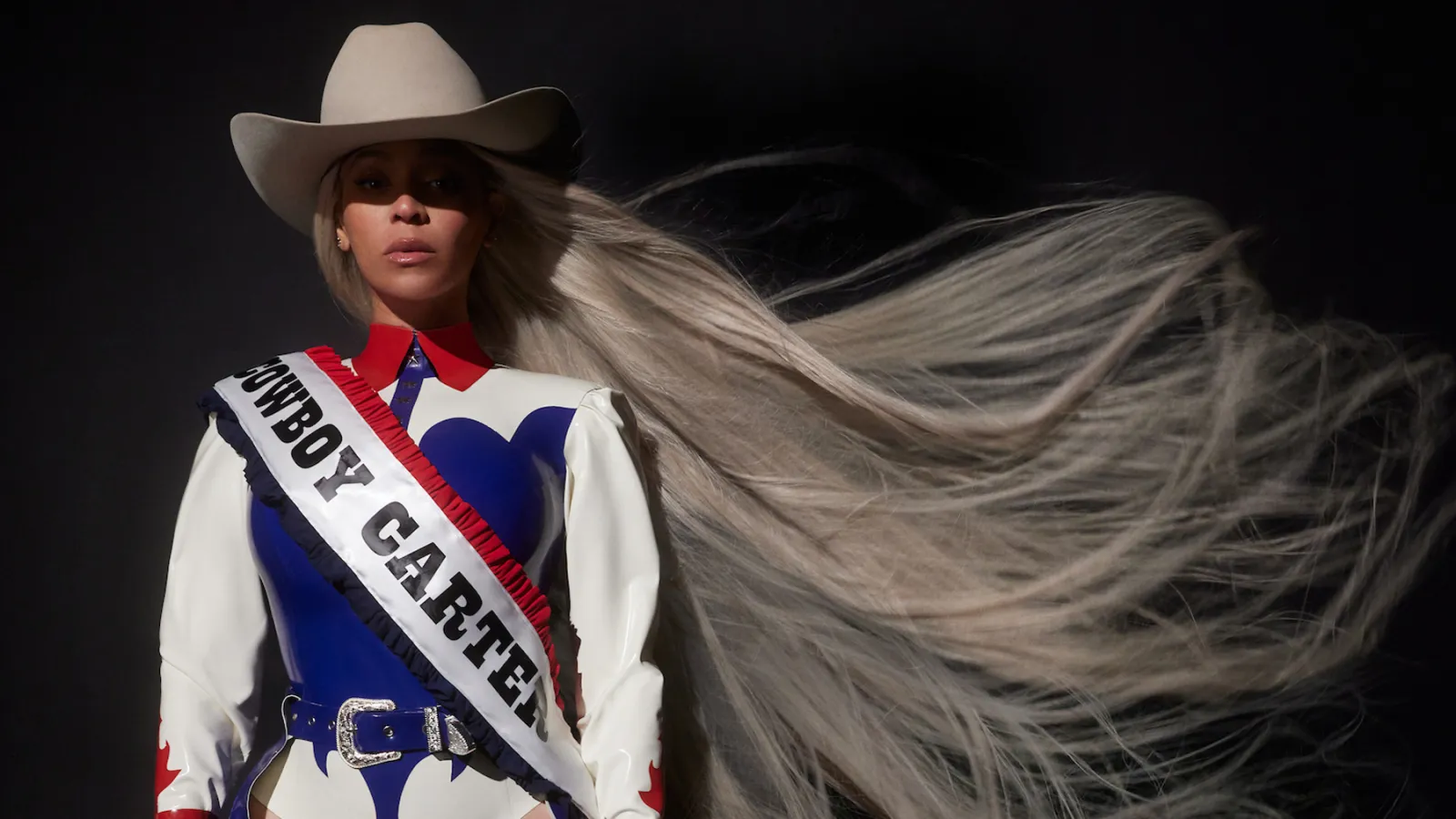
Beyoncé Cowboy Carter arrived not with a whisper, but with the force of a cultural thunderclap. Released on March 29, 2024, as the second installment in Beyoncé’s ambitious “Renaissance” trilogy, this album did something that few musical projects have managed in recent memory — it shattered genre walls, reclaimed a silenced history, and forced an entire industry to look inward. If you thought you knew what a country album sounded like, Cowboy Carter was here to respectfully, brilliantly, and unapologetically prove you wrong.
From the moment the opening chords of “American Requiem” filled speakers around the world, it was clear that Beyoncé wasn’t simply visiting country music — she was staking her claim in a genre that, historically, was shaped in no small part by Black artists whose contributions had long been minimized or erased. Beyoncé Cowboy Carter isn’t just an album. It’s a statement, a history lesson, and an artistic masterpiece all wrapped into one.
What Is Beyoncé Cowboy Carter and Why Does It Matter?
At its core, Beyoncé Cowboy Carter is a genre-defying country and Americana album that draws from the roots of American music — blues, gospel, folk, bluegrass, and rock — weaving them together with Beyoncé’s signature R&B sensibility and pop craftsmanship. The album features 27 tracks, interludes from country legends Linda Martell and Dolly Parton, and collaborations with artists ranging from Miley Cyrus and Post Malone to Willie Nelson and Shaboozey.
But what makes the project matter beyond its sonic ambition is its context. In 2016, Beyoncé performed “Daddy Lessons” at the Country Music Association Awards alongside The Chicks (then Dixie Chicks), and the response from parts of the country establishment was notably cold. Cowboy Carter is widely understood to be Beyoncé’s artistic response to that moment — a full-scale reclamation and recontextualization of American country music from the perspective of a Black Southern woman.
The album’s very name carries meaning. “Cowboy Carter” is a reference to the “Carter” in Beyoncé Giselle Knowles-Carter, rooting the record in her personal identity even as it reaches across the vast landscape of American musical tradition.
The Album’s Historical Foundation: Black Roots of Country Music
One of the most powerful things Beyoncé Cowboy Carter does is educate. The album is drenched in a reverence for Black artists who shaped country and Americana music long before it was co-opted into a predominantly white commercial genre. From the blues pioneers of the Mississippi Delta to the Black cowboys of the American West — a history largely omitted from mainstream country narratives — Beyoncé threads this lineage throughout every track.
The interlude featuring Linda Martell, a trailblazing Black country singer from the 1970s who never received her due recognition, is perhaps the most emotionally resonant moment on the album. Martell’s voice, aged and warm, introduces us to the idea that this genre never belonged to just one group of people. It always belonged to everyone who built it.
Historical context matters deeply here. Scholars and music historians have long documented that Black musicians were central to the formation of what we now call country music. The banjo itself — synonymous with country and folk — has African origins, brought to the Americas through the transatlantic slave trade. Beyoncé Cowboy Carter doesn’t preach this history; it performs it.
Tracklist Highlights: The Songs That Stole the World’s Attention
“Texas Hold ‘Em” — The Lead Single That Broke Records
Before the full album dropped, Beyoncé released “Texas Hold ‘Em” as the lead single, and the world stopped. The song debuted at number one on the Billboard Hot Country Songs chart, making Beyoncé the first Black woman to reach that top position in the chart’s history. Let that sink in. The first. In 2024.
“Texas Hold ‘Em” is infectious, danceable, and deeply rooted in honky-tonk tradition while still feeling unmistakably modern. It’s the kind of song that plays at a dusty barn dance and a rooftop party simultaneously, and it announced Beyoncé Cowboy Carter to even the most casual listeners with undeniable force.
“16 Carriages” — Raw and Revelatory
If “Texas Hold ‘Em” was the crowd-pleaser, “16 Carriages” was the gut-punch. A deeply personal track about sacrifice, childhood’s end, and the cost of ambition, the song showcases Beyoncé’s vocal range and emotional depth in a way that feels stripped down and vulnerable. Against a sparse, Americana-influenced arrangement, she reflects on leaving home to pursue a dream — an experience that resonates far beyond her own biography.
“Jolene” — A Reimagining for the Ages
Covering Dolly Parton’s iconic “Jolene” is a high-wire act for any artist. Beyoncé’s version transforms the pleading original into something fierce and assertive. Where Parton’s narrator begged Jolene not to take her man, Beyoncé’s narrator issues a warning. It’s a masterful reinterpretation that honors the original while entirely recentering female power, and Dolly Parton herself gave it her blessing enthusiastically.
“Ya Ya” — Rock, Blues, and Pure Energy
“Ya Ya” is a hard-charging, guitar-driven track that draws from rock, blues, and early American music with gleeful abandon. It references “Oh! Susanna” and channels the raw energy of early rock-and-roll pioneers like Sister Rosetta Tharpe — another Black woman whose contributions to rock and country music were historically undervalued. The track serves as a joyful, energetic reminder of where American music truly comes from.
Collaborations That Elevated the Album
Beyoncé Cowboy Carter is also notable for the breadth and thoughtfulness of its collaborations. Miley Cyrus appears on “II Most Wanted,” a stunning duet that merges both artists’ Southern roots in a moment of genuine chemistry. Post Malone, Shaboozey, and Tanner Adell also appear throughout, representing a new generation of artists who exist beyond genre’s rigid walls. Willie Nelson’s cameo feels like a passing of the torch, a generational blessing from country royalty.
Beyoncé’s Artistry: Why Cowboy Carter Is Her Most Ambitious Work
Throughout her career, Beyoncé has consistently operated several steps ahead of the cultural conversation. From the surprise self-titled visual album of 2013 to Lemonade‘s emotionally devastating exploration of Black womanhood and marital betrayal, she has never made a predictable move. Beyoncé Cowboy Carter continues that tradition of fearless reinvention.
What sets this album apart from even her own extraordinary catalog is the sheer scope of its ambition. This is not an artist dipping a toe into country for crossover appeal. This is a 27-track deep dive into the soul of American music, assembled with the care and rigor of a doctoral thesis and the passion of someone settling an old score. Every production choice, every guest, every interlude is deliberate.
The production — helmed largely by Beyoncé alongside a team that includes longtime collaborator Raphael Saadiq, Mike Dean, and others — is rich, layered, and cinematic. Acoustic instruments are given as much prominence as digital ones. Steel guitar, fiddle, harmonica, and banjo sit alongside modern beats and vocal processing, creating a sound that is simultaneously ancient and current.
Critical Reception and Cultural Impact of Beyoncé Cowboy Carter
The critical reception to Beyoncé Cowboy Carter was, by virtually any measure, extraordinary. Publications from Rolling Stone and Pitchfork to The Guardian and the New York Times fell over themselves to find superlatives adequate to the occasion. The album earned near-universal acclaim, with many critics calling it one of the most important American albums in decades.
Beyond reviews, the cultural conversation the album ignited was massive. Country radio’s initial reluctance to play “Texas Hold ‘Em” sparked widespread debate about racial gatekeeping in the genre. The Country Music Association and the Recording Academy both faced renewed scrutiny. The word “Cowboy Carter” became shorthand in think-pieces, op-eds, and social media discussions for broader conversations about who gets to claim American cultural heritage.
Awards recognition followed. The album earned multiple Grammy nominations, with Beyoncé making history once again as one of the most nominated and awarded artists in the Recording Academy’s history. The conversation around Cowboy Carter extended well beyond music into the realms of sociology, race studies, and American history.
The Renaissance Trilogy: Where Does Cowboy Carter Fit?
Cowboy Carter is the second act in what Beyoncé has described as a three-part “Renaissance” project. The first act, Renaissance (2022), was a dance and club music celebration rooted in Black queer culture and house music tradition. Cowboy Carter is Act II, turning its lens to country and Americana. Act III has not yet been released, but speculation is rampant.
The trilogy concept is ambitious and intellectually coherent. Each act celebrates a different strand of Black musical heritage that has been either appropriated, forgotten, or minimized by mainstream music history. Taken together, the three albums form a sustained argument: that Black artistry is at the foundation of virtually every major American musical genre, and that Beyoncé — as a Black woman from Houston, Texas — has both the right and the responsibility to inhabit all of it.
Why Beyoncé Cowboy Carter Will Be Studied for Generations
Albums that genuinely change the conversation are rare. Beyoncé Cowboy Carter is one of them. It arrived at a moment when American identity, racial equity, and cultural ownership were all subjects of fierce national debate, and it engaged all of them not through protest or polemic but through breathtaking art.
Future generations of music students, historians, and artists will return to this album the way we return to What’s Going On by Marvin Gaye or Blonde on Blonde by Bob Dylan — as a document of its time that also transcended it. Beyoncé didn’t just make a country album. She made a case for what American music has always been, and what it could be when we stop building walls around it.
FAQs
What genre is Beyoncé Cowboy Carter?
Cowboy Carter is primarily a country and Americana album, but it draws from a wide range of American musical traditions including blues, gospel, folk, rock, and R&B. Beyoncé herself has pushed back against strict genre labels, describing the album as a celebration of American music in its fullest, most historically complete form.
When was Beyoncé Cowboy Carter released?
The album was officially released on March 29, 2024. The lead singles “Texas Hold ‘Em” and “16 Carriages” dropped on February 11, 2024 — Super Bowl Sunday — generating massive anticipation.
Who are the featured artists on Cowboy Carter?
The album features an impressive array of collaborators including Miley Cyrus, Post Malone, Willie Nelson, Shaboozey, Tanner Adell, Reyna Roberts, Brittney Spencer, Tiera Kennedy, and interludes from Linda Martell and Dolly Parton, among others.
Did Beyoncé Cowboy Carter win any Grammy Awards?
Beyoncé Cowboy Carter received multiple Grammy nominations following its release. Beyoncé has historically been one of the most honored artists in Grammy history, and the album’s nominations continued that trajectory. For the most current award results, checking the Recording Academy’s official website provides the latest information.
Why is Beyoncé Cowboy Carter considered historically significant?
The album is considered historically significant for multiple reasons: it debuted at number one on the Billboard 200, “Texas Hold ‘Em” made Beyoncé the first Black woman to top the Hot Country Songs chart, and the project sparked a major national conversation about the Black roots of country music and racial gatekeeping within the genre. It is widely regarded as one of the most culturally important American albums of the 21st century.