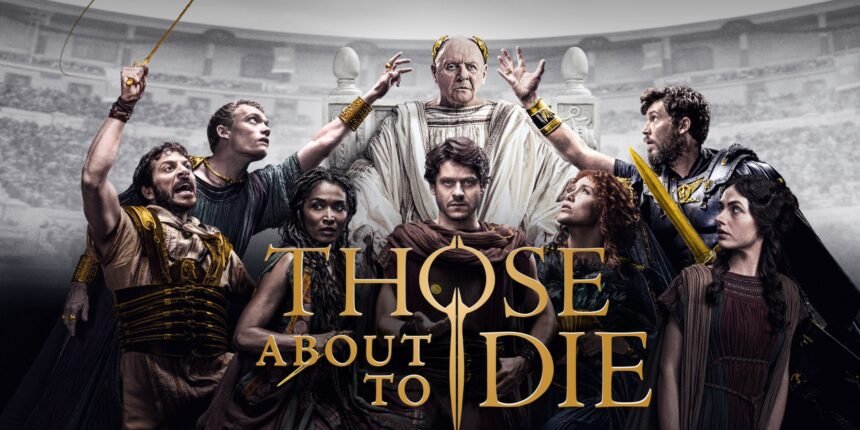
Those About to Die is an epic historical-drama TV series that premiered on July 18, 2024, transporting viewers into the gritty and extravagant world of ancient Rome. Inspired by Daniel P. Mannix’s 1958 non-fiction book of the same name, the series dives deep into the politics, power struggles, and brutal entertainment industry surrounding the Roman arena. With its sweeping cinematography, large-scale action sequences, and richly layered storytelling, Those About to Die explores the lives of gladiators, emperors, and the citizens who fueled one of history’s most fascinating — and deadly — spectacles. Blending historical insight with gripping drama, the series offers a vivid and immersive look at a civilization defined by ambition, violence, and the relentless pursuit of glory.
What is Those About to Die
Those About to Die is an epic historical‑drama TV series that premiered on July 18, 2024.
It draws inspiration from the non‑fiction book of the same name by Daniel P. Mannix, using its insights into ancient gladiatorial combat and Roman societal spectacles as a foundation for the show’s narratives.
Directed by acclaimed filmmakers — Roland Emmerich and Marco Kreuzpaintner — and developed by screenwriter Robert Rodat, the series sets its story in 79 AD during the reign of Emperor Vespasian.
With a budget reportedly around US$140 million, the show aims for grand scale — sandy arenas, roaring crowds, chariot races, gladiators, political intrigue and moral decay — offering a visceral, unflinching portrayal of ancient Rome’s brutal entertainments.
Premise & Story: Violence, Politics, and Spectacle
The heart of Those About to Die lies in the intersection of violence, spectacle, and corruption. Set against the backdrop of Roman imperial power, the show follows multiple interconnected storylines — gladiators, chariot racers, slaves, gamblers, and ruthless politicians — all vying for influence, survival, or redemption.
- The aging Emperor Vespasian rules Rome while his sons — Titus and Domitian — contend with political maneuvering and succession struggles. Vespasian attempts to placate the masses with violent spectacles: gladiatorial combats, chariot races and public games.
- Amid this backdrop, we meet the rough‑and‑tumble underworld of chariot‑racing and gambling: criminals, race‑fixers, and ambitious outsiders seeking to exploit the games for their own gain.
- Parallel to the games are stories of slavery, forced combat, and the cruelty meted out to those at society’s bottom — a stark reminder of the human cost behind every cheer in the arena. Stranger Things
In many ways, the show is as much about Rome’s decaying social core and political rot as it is about blood‑soaked spectacles.
Key Figures & Characters
- Vespasian (portrayed by Anthony Hopkins) — The elderly emperor attempting to maintain control over a fracturing empire through bread and circuses.
- Titus & Domitian — Vespasian’s sons, whose rivalry and ambition set the stage for political intrigue and succession drama.
- Tenax (played by Iwan Rheon) — A crime‑boss turned games‑master and central figure in the underworld of gambling and chariot racing. Through him, the show explores the dark business behind Roman entertainment.
- Various gladiators, slaves and commoners — Representing the exploited underclass and adding more human, tragic dimensions to the brutal world of arenas and power.
This ensemble structure attempts to give viewers a panoramic view of Roman society — from emperors to slaves — though with mixed success when it comes to character depth.
Style, Tone & What It Tries to Do
Those About to Die markets itself as a gritty, realistic look at ancient Rome’s underworld of spectacle — not sanitized heroics, but raw violence, moral ambiguity, and power‑plays beneath the Colosseum’s shadow.
- The show leans heavily on visual spectacle: lavish sets, arena crowds, chariot races, gladiatorial combat and a general atmosphere of decadence and decay.
- It uses the Roman arena and public games as metaphors for modern concerns: class disparity, exploitation, spectacle as distraction, and the corrupting nature of power and entertainment.
- However — and this has been a common critique — the series sometimes sacrifices narrative depth and character development for the sake of spectacle, resulting in shallow arcs and stereotyped portrayals.
Reception — What Worked vs. What Didn’t
What Fans & Critics Liked
- Many praised the ambition and scope: the recreation of ancient Rome, the arenas, the scale of set design and atmosphere.
- Visceral spectacle — the gladiator fights, chariot races and political intrigue — offer a kind of raw, brutal charm, recalling classic “sword‑and‑sandals” epics.
- For some viewers, the show works as a throwback to historical‑epic drama, offering entertainment in a world of moral ambiguity, violence, and survival struggles.
Criticisms & Weaknesses
- Character development is often criticized as flat or superficial, with many storylines spread across too many characters — leaving scant emotional investment.
- The narrative can feel overcrowded, with frequent subplot shifts and little cohesion. Some critics argue that the show bites off more than it can chew.
- Despite the large budget, some feel the show resorts to sensationalism — sex, blood, and gore — rather than thoughtful exploration, reducing its dramatic potential.
According to aggregated critic scores, Season 1 holds a mixed or average reception.
Who Should Watch Those About to Die — And Who Might Skip It
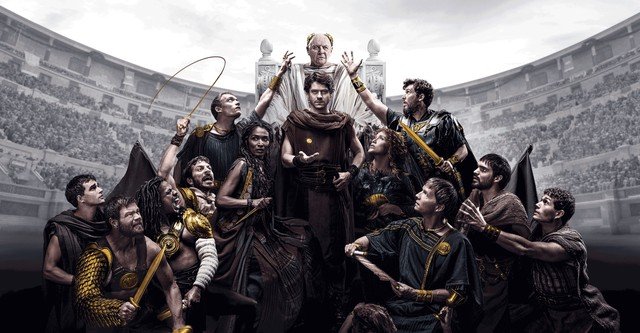
Watch it if you enjoy:
- Grand historical epics with sand, swords, intrigue and spectacle
- Gladiatorial combat, chariot races, bloody arenas, and gritty settings
- Stories of power, survival, and moral ambiguity set in ancient Rome
- Classic “bread and circuses” dramas — less subtlety, more visceral spectacle
Skip (or approach with caution) if you prefer:
- Strong character development and deep emotional arcs
- Tight, cohesive storytelling with fewer subplots
- Historical realism and subtlety over sensationalism
Broader Significance — What Those About to Die Reflects
Even with its flaws, the series taps into something potent: our continuing fascination with violence, spectacle, and the darkest corners of human ambition. By reviving an era when entertainment was literally a life‑and‑death matter, it forces us to reflect — however imperfectly — on themes like corruption, inequality, suffering, and the cost of power under the guise of “public amusement.”
In a media landscape full of polished fantasy and sanitized historicals, Those About to Die reminds us that history can be messy, ruthless — and deeply human in its cruelty and desperation.