The global entertainment world in 2026 is overflowing with content. From billion-dollar cinematic universes to independently produced regional films, from immersive streaming experiences to short-form storytelling on social platforms, audiences are surrounded by choice. Yet despite this abundance, certain names continue to echo across search engines and social discussions. “Bollyflix Maza” is one such phrase.
Over time, Bollyflix Maza has come to be associated with unofficial movie distribution spaces, often discussed in the same breath as other well-known piracy-linked labels. But in 2026, Bollyflix Maza is not just a keyword typed into a search bar. It represents a much broader story about digital habits, access to entertainment, cultural curiosity, evolving technology, and the tension between convenience and responsibility.
This article does not promote piracy or illegal activity. Instead, it explores Bollyflix Maza as a digital phenomenon. We will look at what it generally represents, why people continue to search for it, what risks and realities surround such platforms, and how modern audiences can navigate entertainment choices wisely in an age where legal alternatives are richer than ever.
Understanding What Bollyflix Maza Represents Today
In earlier years, names like Bollyflix Maza were often tied to specific websites. Over time, many of those sites disappeared, reappeared under different domains, or were replaced by similar platforms. What remained was the name itself, circulating in online conversations as a shorthand for unauthorized movie portals, particularly those claiming to host Bollywood and regional South Asian cinema.
By 2026, Bollyflix Maza functions less as a fixed destination and more as a symbolic label. It reflects a category of unofficial spaces where copyrighted films and series are shared without proper licensing. These platforms often present themselves as convenient libraries, promising fast access and minimal barriers.
However, the digital world around them has transformed dramatically. Today’s internet is shaped by subscription ecosystems, smart algorithms, global release strategies, and intense copyright monitoring. In this context, Bollyflix Maza has become more of a cultural reference point than a dominant viewing hub.
Why Bollyflix Maza Still Appears in Searches
The persistence of Bollyflix Maza as a search term reveals more about user psychology than about the strength of any single site.
First, digital memory is powerful. Words typed repeatedly over years become habitual. For many users, such names are mental shortcuts associated with “movie search,” even if they no longer rely on those sources.
Second, entertainment fragmentation contributes to frustration. A film might appear on one streaming service in one country and a different service elsewhere, or not be available at all. When users cannot quickly locate a title, they often revert to familiar phrases.
Third, cultural excitement drives immediacy. Major releases, trending dramas, and viral scenes spark instant global curiosity. When official distribution lags behind online buzz, unofficial names resurface in search behavior.
Finally, there is the enduring myth of free access. Despite greater awareness, some users still underestimate the hidden costs of unauthorized platforms, assuming the only difference is price, not safety, ethics, or long-term impact.
The Technological Evolution of Unofficial Movie Platforms
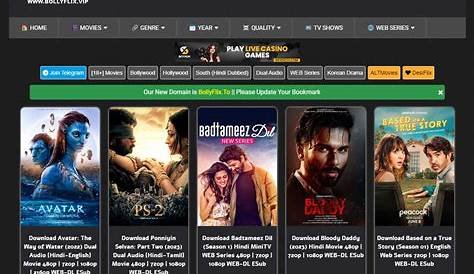
Unauthorized entertainment sites in 2026 bear little resemblance to the chaotic web pages of the past. Many adopt clean layouts, mobile-first design, and interfaces modeled after legitimate streaming apps. Artificial intelligence tools are sometimes used to auto-generate descriptions, categorize content, and even create multilingual labels.
Cloud infrastructure enables rapid copying and mirroring, making such platforms harder to permanently dismantle. Decentralized hosting techniques further complicate enforcement.
Yet behind this apparent polish lies a more dangerous reality. Advertising networks tied to unofficial platforms often push aggressive pop-ups, deceptive banners, and hidden scripts. Some pages run background processes that exploit device resources. Others attempt to install tracking software or redirect users to fraudulent portals.
Thus, while Bollyflix Maza may look more “modern” than its predecessors, the technological risks associated with such environments have grown more sophisticated and less visible.
Legal Reality and Copyright in 2026
Copyright law has not softened with time. In fact, by 2026 it has become more globally coordinated and technologically supported than ever before.
Content owners use automated fingerprinting systems capable of scanning the web for leaked material within minutes of release. Governments collaborate across borders to target large piracy networks. Search engines downrank infringing domains. Hosting providers respond quickly to takedown requests. Internet service providers in many regions issue warnings or restrict access after repeated violations.
For users, this means interaction with unauthorized platforms carries greater visibility and potential consequence. For operators, the stakes involve not only financial penalties but also serious legal action.
Bollyflix Maza, as a name associated with unauthorized distribution, exists firmly within this environment of heightened scrutiny.
Cybersecurity: The Overlooked Danger
In 2026, personal data is deeply intertwined with daily life. Banking, education, healthcare, employment, and even home security depend on digital systems. Visiting risky websites is no longer a trivial choice.
Unofficial movie portals are common vectors for malware. Some deploy spyware that tracks browsing behavior and keystrokes. Others host fake download buttons that install harmful programs. There are also phishing schemes that mimic well-known services, tricking users into giving away credentials.
The consequences can range from slower devices and intrusive ads to stolen identities and financial loss. For families, this can mean compromised parental controls. For professionals, it can mean leaked work accounts. For students, it can mean corrupted projects and lost data.
This makes the Bollyflix Maza conversation not only about legality, but also about digital self-preservation.
The Human Cost Behind Cinema
Every film represents the labor of hundreds, sometimes thousands, of individuals. Writers spend years developing scripts. Technicians build sets and design soundscapes. Actors train and rehearse. Editors shape raw footage into coherent stories. Marketing teams work to ensure films reach audiences.
Revenue from legitimate distribution funds future projects. It supports independent studios. It enables experimentation and cultural diversity. When audiences bypass legal channels, the loss is not abstract. It affects which stories get told, which voices are amplified, and which careers can continue.
In 2026, where streaming analytics directly influence green-lighting decisions, piracy distorts reality. A film widely watched through unofficial channels may appear commercially weak, discouraging sequels or similar projects. Bollyflix Maza, therefore, indirectly shapes cultural output by altering how success is measured. Dhurandhar movie
The Growth of Legal, Affordable Alternatives
One of the most encouraging developments of recent years has been the expansion of accessible legal entertainment options.
Streaming platforms now offer tiered pricing, including low-cost mobile plans and ad-supported free tiers. Regional services highlight local cinema, bringing previously hard-to-find films into the mainstream. Telecom providers bundle subscriptions with data packages. Educational institutions grant access to film archives and documentary libraries.
Even social media platforms host licensed short films, web series, and live events. Public broadcasters release content through on-demand apps. Together, these options form a mosaic of legal access unimaginable a decade ago.
In this environment, the challenge is less about availability and more about awareness and habit. Many users simply do not realize how many legitimate options exist.
Changing Attitudes Toward Digital Entertainment
Audiences coming of age in 2026 have grown up alongside creator economies, app ecosystems, and subscription models. They understand that digital visibility often translates directly into livelihood.
For many younger viewers, official platforms are not just legal; they are expected. They associate them with high-resolution playback, accurate subtitles, accessibility features, and community interaction. They value behind-the-scenes content, official merchandise links, and interactive fan spaces.
As a result, the cultural pull of names like Bollyflix Maza has weakened. It persists more as a search habit or cultural echo than as a defining part of everyday viewing.
Bollyflix Maza as a Reflection of Internet History
From a sociological perspective, Bollyflix Maza offers insight into how internet culture preserves certain terms long after their practical relevance fades. These names become part of digital folklore, passed along through forums, comments, and casual recommendations.
Media scholars study such phenomena to understand how online communities adapt to technological change, how trust forms in digital spaces, and how economic realities influence content consumption.
In this sense, Bollyflix Maza belongs not only to the realm of entertainment, but also to the broader story of how the internet has evolved.
Digital Literacy and Responsible Choices
Education plays an increasingly important role in shaping online behavior. Schools and universities teach digital citizenship, copyright ethics, and cybersecurity awareness. Public campaigns emphasize the value of supporting creative industries and protecting personal data.
When users understand both the risks and the ripple effects of their choices, they are more likely to seek legitimate alternatives and demand fair pricing and better distribution from official platforms.
In such an environment, Bollyflix Maza becomes a reference point for discussion rather than a default destination.
Frequently Asked Questions (FAQs)
What is Bollyflix Maza generally known for?
It is widely recognized as a name associated with unofficial movie distribution spaces, often linked in public perception to unlicensed content.
Is Bollyflix Maza a single website?
Not necessarily. Over time, the name has been used in connection with multiple sites and online references, rather than one stable platform.
Is using such platforms legal?
Accessing copyrighted material without permission is illegal in many countries and can carry legal consequences.
Why do people still search for Bollyflix Maza in 2026?
Searches often reflect habit, cultural curiosity, or difficulty locating specific titles across fragmented streaming services.
What risks are associated with unofficial movie sites?
Risks include malware, spyware, phishing attacks, intrusive advertising, and potential exposure to legal action.
Can just visiting these sites be harmful?
Yes. Even without downloading files, malicious scripts can compromise devices or collect personal data.
How does piracy affect the film industry?
It reduces legitimate revenue, distorts performance data, and can limit funding for future projects and independent creators.
Are there affordable legal ways to watch movies today?
Yes. Many platforms offer low-cost plans, free ad-supported access, regional pricing, and bundled subscriptions.
How do younger audiences view unofficial platforms?
Trends suggest younger viewers increasingly prefer official services for quality, safety, and ethical reasons.
Is it illegal to discuss Bollyflix Maza?
No. Discussing and analyzing it is legal and often part of media literacy and cultural studies.
Will names like Bollyflix Maza disappear?
They may fade over time, but some persist as cultural references reflecting earlier internet habits.
What is the most responsible way to enjoy cinema today?
Using licensed platforms, supporting official releases, and engaging with creators through recognized channels.
Conclusion: Bollyflix Maza and the Path Forward
In 2026, Bollyflix Maza no longer defines how most people experience cinema. Instead, it stands as a reminder of a transitional era, when access was uneven and digital ecosystems were still forming.
Today’s entertainment world is broader, more inclusive, and more technologically advanced. Audiences can explore global cinema, support local storytellers, and enjoy immersive experiences across devices. With this abundance comes a new kind of responsibility.
Understanding Bollyflix Maza today means recognizing why such names emerged, acknowledging the risks they carry, and appreciating how far digital culture has progressed. The future of cinema lies not in unregulated corners of the web, but in transparent, creative ecosystems where technology supports both viewers and storytellers.
By choosing awareness over impulse and ethics over shortcuts, modern audiences help shape an entertainment industry that is safer, fairer, and more vibrant for generations to come.