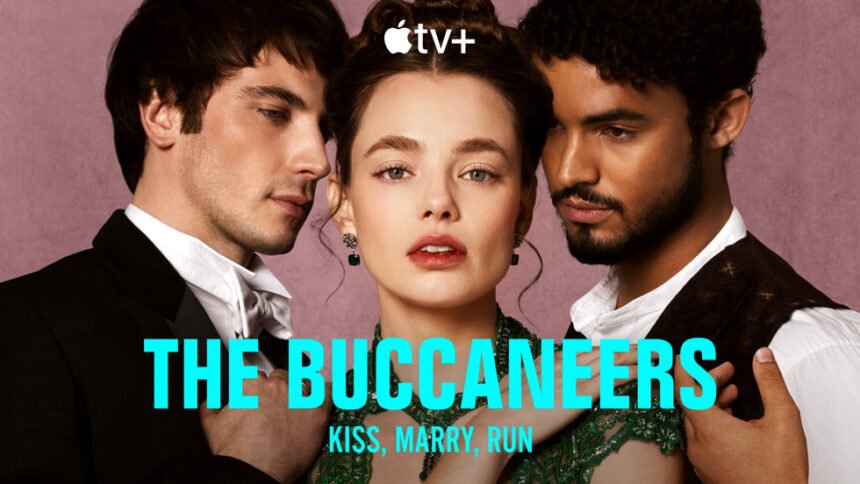
Edith Wharton’s The Buccaneers occupies a strange, magnetic place in American letters: an unfinished final novel (published posthumously in 1938) about five wealthy, adventurous young American women who cross the Atlantic to seek husbands, titles, and—if the heart permits—love. In recent years that half-told story has been reborn as a glossy, music-forward television drama that leans into contemporary sensibilities while trying to keep Wharton’s social eye intact. This post is a deep-dive into the original novel, its historical context and themes, and the TV adaptation that introduced The Buccaneers to a whole new audience.
- A quick primer: what (and how much) did Wharton write?
- The plot in a nutshell (what Wharton left us)
- Themes worth lingering on
- From page to screen: why adapt an unfinished novel?
- The TV show at a glance (production, release, and style)
- How the adaptation reimagines Wharton (what changes and why they matter)
- Reception: critics, viewers, and literary readers
- Standout elements worth watching for
- So—should you read the novel, watch the series, or both?
- Final thoughts
- FAQ
A quick primer: what (and how much) did Wharton write?
Edith Wharton wrote roughly 29 chapters of The Buccaneers before she died in 1937; the manuscript was published posthumously in 1938 in that unfinished form. Wharton left an outline and notes indicating how she intended to finish the narrative, but she never completed the closing chapters herself. Because of that fragmentary status, the book has attracted both affection and frustration: readers delight in Wharton’s fertile social observations and characterization, while many critics have wondered what moral and narrative resolutions the final, missing chapters would have supplied. (A completed version based on Wharton’s notes by Marion Mainwaring appeared in 1993, but Jakeways’ show chooses to work directly from Wharton’s original text and its possibilities.
The plot in a nutshell (what Wharton left us)
Set in the 1870s, the story follows five young American heiresses—often called the “buccaneers”—who, spurred by social exclusion at home and ambition at heart, participate in the London Season to win husbands among the titled but cash-poor British aristocracy. The cast includes spirited protagonists such as Nan and Jinny St. George and their friends (Lizzy, Mabel, Conchita in many dramatizations). Wharton explores the clash of cultures—new American money and independence versus old English titles and tradition—and scrutinizes how marriage, wealth, and reputation shape women’s choices and freedoms. The novel moves between witty social tableaux and sharper moral questions about agency, compromise, and identity.
Themes worth lingering on
- Marriage as transaction and theatre. Wharton is fascinated by the marriage market: how economic need, social status, and personal desire intersect in a system that often commodifies women.
- Anglo-American culture clash. The Americans bring a brash confidence and commercial power; the English bring lineage and protocol. Wharton mines the friction for satire and sympathy.
- The unfinished moral: ambiguity and consequence. Because Wharton didn’t finish the book, modern readers are forced into an interpretive role: how might she have resolved the tensions? Would she have delivered moral certainties, or left ambiguity—consistent with some of her darker works?
From page to screen: why adapt an unfinished novel?
Adapting The Buccaneers contains a built-in creative invitation: the novel’s incompleteness lets writers expand hinted arcs and imagine new scenes while staying in conversation with Wharton. Katherine Jakeways, the creator of the Apple TV+ drama, elected to base the show on Wharton’s original manuscript (rather than the later completed version) and to amplify elements she felt were present but under-explored—friendship, queer desire, domestic power dynamics—while retaining the novel’s satirical edge. The result is not a strict period-accurate reproduction; it’s an interpretation that mixes historical setting with a contemporary tone.
The TV show at a glance (production, release, and style)
- Platform & premiere: The series premiered on Apple TV+ (the first three episodes released on November 8, 2023). It’s produced by The Forge and led by an overwhelmingly female creative team. Wikipedia
- Creator & showrunner: Katherine Jakeways developed the script for television; Susanna White is among the directors and executive producers.
- Cast highlights: Kristine Frøseth (Nan), Imogen Waterhouse (Jinny), Alisha Boe (Conchita), Josie Totah (Mabel), Aubri Ibrag (Lizzy), with Christina Hendricks in a prominent adult role as Mrs. St. George—an assemblage that mixes emerging talent with veteran actors.
- Musical identity: One of the show’s standout choices is its modern soundtrack—an intentionally anachronistic mix featuring contemporary female artists and original music produced by Stella Mozgawa. The goal is emotional accessibility: pop and indie tracks underscore feelings the late-19th-century characters are experiencing, bridging distance between viewers and period characters.
How the adaptation reimagines Wharton (what changes and why they matter)
- More explicit modern themes. Jakeways leans into themes that resonate with 21st-century audiences: female solidarity, autonomy, and queer relationships. These are not necessarily inventions—Wharton’s manuscript hints at complex emotional lives—but the show chooses to dramatize them more fully. Critics and fans are split: some praise the show’s fresh energy and inclusiveness, while purists call out departures from Wharton’s tone.
- Tone and pacing. The series adopts a breezier, sometimes frothier tone than Wharton’s more austere realism; think a cross between the theatricality of the London Season and modern prestige-romcom pacing. That makes it more binge-friendly and accessible, but changes the emotional register from Wharton’s usual moral coolness.
- Historical fidelity vs. creative license. Costume, set, and social details are generally lush and of high production value, but the storytelling intentionally echoes modern sensibilities—contemporary language in the soundtrack, for instance—to create emotional immediacy. Whether this counts as respectful reinterpretation or anachronistic smoothing depends on viewer taste.
Reception: critics, viewers, and literary readers
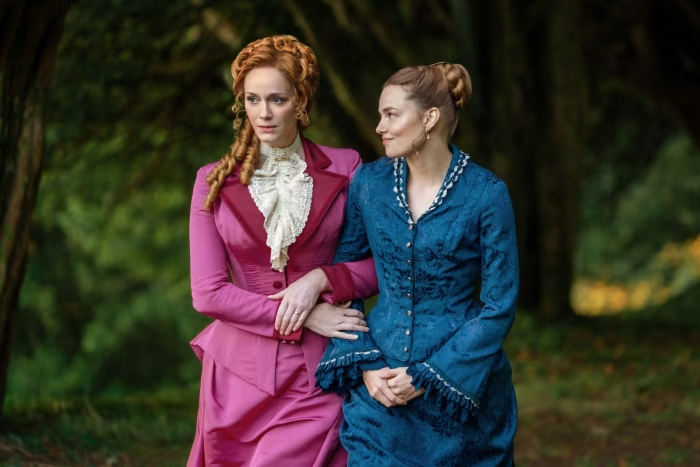
The TV series received generally favorable reviews—Rotten Tomatoes aggregated a warm critical consensus calling it “a feminist and frothy treat” for period-drama fans—while individual commentary ranged from enthusiastic praise for its charm and inclusivity to sharper criticism from readers who felt the show softened Wharton’s more exacting moral impulses. Longtime Wharton scholars have debated whether the adaptation honors the author’s intentions or reshapes them for contemporary popularity. Wharton’s novel continues to invite debate precisely because its unfinished status leaves room for retellings.
Standout elements worth watching for
- Friendship as central engine. The show foregrounds the girls’ bonds—jealousies, alliances, betrayals—making female friendship as crucial as any romantic plotline.
- Soundtrack as emotional shorthand. Contemporary songs punctuate big moments; the music often tells you what to feel in scenes where Wharton might have relied on subtext.
- A modern visual grammar. Camera work, editing, and costume choices are sometimes deliberately modern (bright color palettes, kinetic shots) to emphasize immediacy.
- Questions unresolved by Wharton become narrative fuel. Because the novel stops short, the show uses that narrative vacancy to build arcs and character growth that feel satisfying to contemporary viewers.
So—should you read the novel, watch the series, or both?
Both. Reading Wharton’s The Buccaneers (even in its unfinished form) offers rich reward: the author’s satirical wit, keen social observation, and the eerie sense of a great mind interrupted. Watching the series is a different pleasure: lush production, contemporary emotional clarity, and character arcs extended beyond the book’s last page. Going from novel to screen gives you the chance to compare authorial restraint with modern narrative generosity, and to decide where you stand on adaptation politics. Cruel Intentions
Final thoughts
The Buccaneers is a rare cultural object that exists in three provocative states at once: as Wharton’s final, unfinished manuscript; as an editorially completed novel from the 1990s; and as a 21st-century TV series that uses Wharton as a springboard to talk about gender, power, and emotional truth. For readers who love the razor-edge of Wharton’s social critique, the novel remains essential. For viewers who want period spectacle woven with contemporary emotion, the Apple TV+ series is a rewarding watch. Either way, the conversation that Wharton began—about money, marriage, and agency—keeps growing, proving that even an incomplete novel can have a long afterlife.
FAQ
1. What is The Buccaneers about?
The Buccaneers follows five wealthy American women in the 1870s who travel to London to marry into the British aristocracy, exploring love, wealth, and society.
2. Who wrote The Buccaneers?
The novel was written by Edith Wharton. It was her unfinished final work, published posthumously in 1938.
3. Why is the novel considered unfinished?
Wharton completed only 29 chapters before her death. She left notes on how the story might end, but she never wrote the conclusion.
4. When was the TV adaptation released?
The Apple TV+ adaptation of The Buccaneers premiered in November 2023.
5. Who stars in the TV series?
Kristine Frøseth (Nan), Imogen Waterhouse (Jinny), Alisha Boe (Conchita), Josie Totah (Mabel), Aubri Ibrag (Lizzy), and Christina Hendricks in a key role.
6. How faithful is the series to Wharton’s novel?
The series follows the original manuscript but adds modern themes, emotional arcs, and contemporary music for accessibility.
7. What themes does The Buccaneers explore?
Marriage as transaction, cultural clash between Americans and British, female agency, friendship, and social ambition.
8. Is there a completed version of the novel?
Yes, in 1993, Marion Mainwaring completed the novel based on Wharton’s notes, but the TV series mainly draws from Wharton’s original text.
9. What makes the show unique?
Its modern soundtrack, emphasis on female friendships, diverse casting, and interpretation of unfinished storylines make it stand out.
10. Should I read the novel or watch the series first?
Both are rewarding. Reading Wharton gives literary insight; watching the series offers emotional and visual storytelling.